 Ladder Games
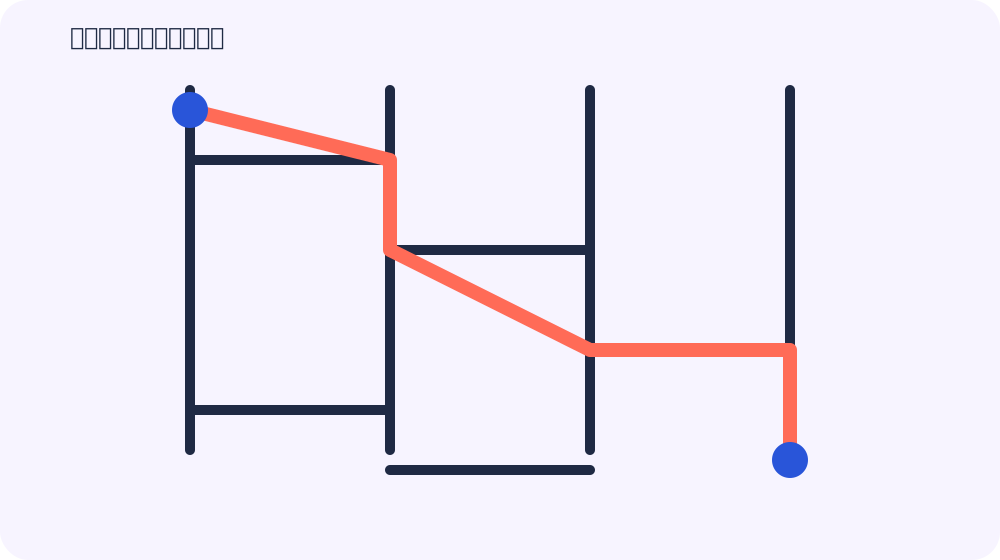
State the model
A probability statement needs assumptions. For example, there may be n participants, n outcomes, uniformly generated arrangements, and independent rounds. A real tool should not be assumed to satisfy these conditions without evidence.
A simple example
If four participants are matched to four outcomes and every permutation is equally likely, one participant has a theoretical probability of 1/4 for any fixed outcome. This describes the model, not the measured behavior of an unknown platform.
Frequency is not prediction
A short sequence can differ greatly from the theoretical proportion. Recording many simulations can illustrate variation, but past frequency alone does not determine the next independent result.